
The Secret Power of Maps in Any Genre
From floor plans to star charts, location matters more than you think.

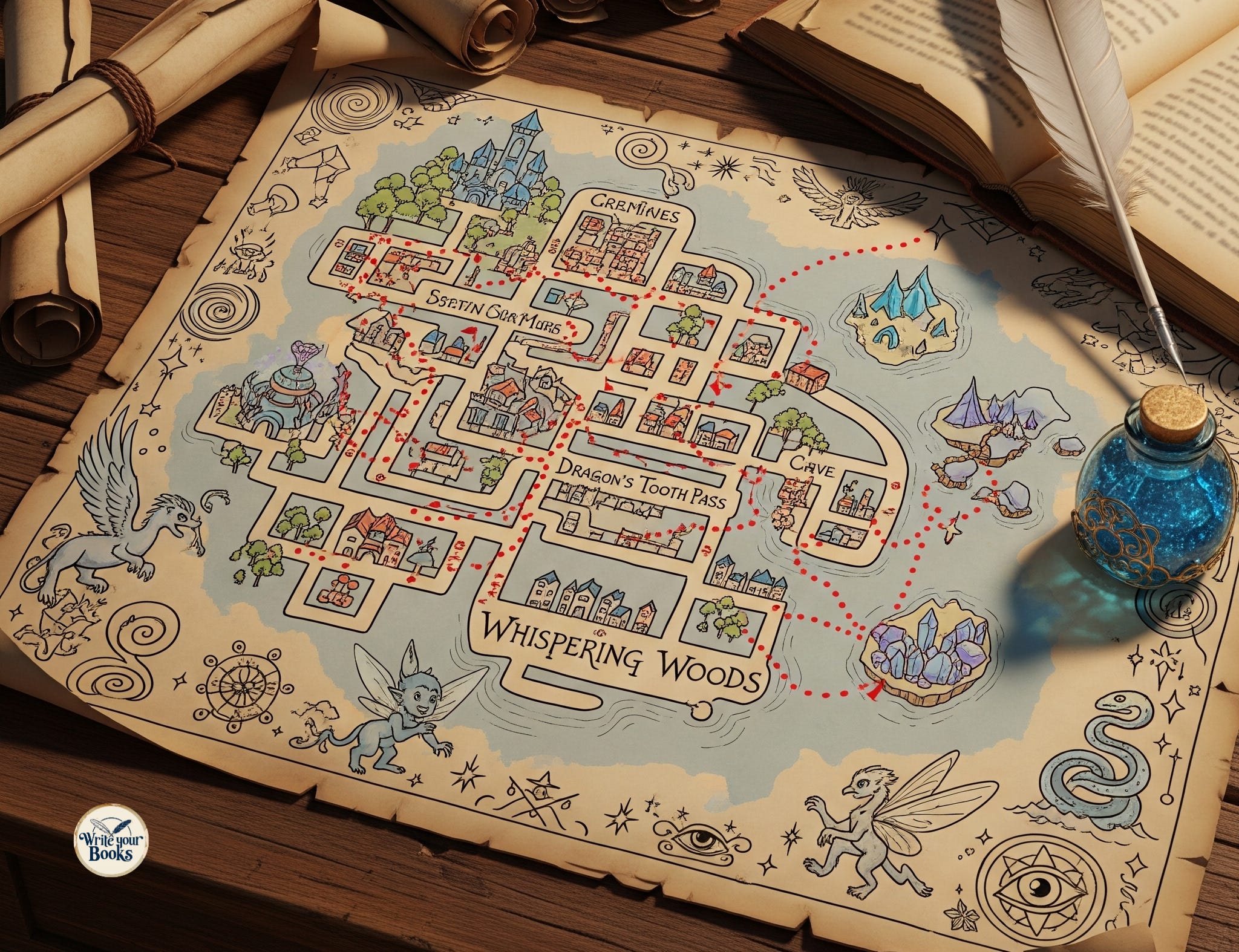
When you hear “story map,” do you picture parchment scrolls, mountain ranges, and “Here Be Dragons” doodled in the corners?
We often think of maps as a fantasy-only thing. You know, the kind that takes up the first two pages of an epic novel and sends you squinting at mountain ranges and winding rivers. But the truth is, every story lives somewhere. And understanding the “where” can change how your plot unfolds.
Whether it’s a sprawling fictional kingdom, a gritty city neighborhood, or a single apartment building with squeaky floors and questionable plumbing, maps can be your story’s secret weapon.
💒Location Shapes Story
A setting’s layout decides more than scenery. It controls what your characters can and can’t do. If your hero’s in a small fishing town, they can’t just pop over to the big city for supplies without a journey. If your mystery unfolds in a massive corporate building, knowing who sits where could determine who overhears a conversation… and who couldn’t have.
A well-thought-out map, whether drawn or simply visualized in your head, helps keep the logic of your story intact and believable.
✈️Travel Routes Create Tension
Distance is about effort, risk, and opportunity. A character who must cross a dangerous bridge or navigate a maze of back alleys faces challenges beyond just “getting there.” The path can slow them down, force them into unexpected encounters, or give them moments to reflect. And for you, the writer, that’s gold.
Even in a contained setting like an apartment complex, you can use layout for suspense. Maybe the laundry room is in the creepy basement. Maybe the fire escape runs past the antagonist’s window. These details can add layers of tension without changing a single plot point.
🗺️Proximity Sparks Connection
Maps create obstacles and surprising moments of connection. If two characters live close to each other, they’re more likely to bump into each other, share resources, or overhear things they “shouldn’t.”
These chance meetings feel natural when they’re grounded in a believable geography. And when you know the lay of the land, it’s easier to weave those moments into your plot without them feeling forced.
You Don’t Have to Draw It (But You Can)
Some writers make gorgeous maps. Others scribble a few boxes and arrows on scrap paper. If you're not an artist, it’s okay. Just make sure you know your story’s geography. Even a rough sketch can prevent inconsistencies and spark new ideas.
When your characters live in a place that feels real, like a magical continent, a bustling suburb, or a single hallway, you’re giving readers the gift of immersion. And that’s one map worth keeping close.

Before You Go
Next time you sit down to write, think about where your story actually lives. Not just the country or city, but the paths, barriers, and hidden corners that shape your characters’ journeys. A map, may it be real or imagined, might just be the thing that helps your world click into place.
Keep writing the stories only you can tell,
—Laura
P.S.
Next up in this August series on Worldbuilding That Transports Readers:
“Writing Time as a Character: How timelines, seasons, and history can shape your story.”
Spoiler: Your plot might hinge more on the calendar than you realize.
✉️ Make sure you’re subscribed to Write Your Books so you don’t miss it!